


A troy ounce is equal to 31.1035 grams — slightly heavier than the standard (avoirdupois) ounce used in everyday life, which weighs 28.35 grams. That difference of roughly 2.75 grams matters enormously in precious metals, because gold, silver, platinum, and palladium are priced and traded in troy ounces everywhere in the world.
When you see a gold price quoted on a commodities exchange, or a bullion dealer’s website, that figure is typically expressed per troy ounce. Understanding what a troy ounce is, how it converts to grams and kilograms, and why it became the standard unit for precious metals is useful context for anyone buying or following the gold price.
At BullionStar, we have been helping investors since 2012, and are very familiar with this unique unit of weight. This guide covers the definition, a quick comparison with the standard ounce, conversion figures, and how the troy ounce is used in gold and silver pricing.
Troy Ounce Definition: The Standard Unit for Precious Metals
One troy ounce equals exactly 31.1035 grams. It is the standard unit of weight for precious metals across global markets, used by exchanges, central banks, refineries, and bullion dealers worldwide. The troy ounce is commonly abbreviated as ozt or oz t, and sometimes written as toz — you will see all three used across price feeds, product listings, and dealer documentation. On product specifications and bullion certificates, the abbreviation distinguishes troy ounces from the standard avoirdupois ounce (oz). On most coins and bars however it is typical to see a troy ounce denoted simply as oz, one of the key points of confusion for new investors.
Troy Ounce History
The name is believed to originate from Troyes, a city in the Champagne region of France that was one of the most important trading hubs in medieval Europe. The great Champagne fairs held there from the 12th century onward attracted merchants from across the continent, and the weights and measures used at those fairs gradually became a shared commercial standard.
The troy system of weights (which includes the grain, the pennyweight, and the troy ounce) spread through European trade, and the troy ounce was formally adopted into English law for gold and silver in 1527 under Henry VIII. A virtually identical troy ounce was also adopted for US coins in May, 1828. Despite a move towards the metric system across much of the world, the troy ounce remained the official unit of measurement for precious metals.
One feature of the troy system that often surprises people is that a troy pound is lighter than a troy ounce might suggest. There are only 12 troy ounces in a troy pound (373.24 grams), compared to 16 avoirdupois ounces in a standard pound (453.59 grams). In practice, the troy pound is rarely used today — the troy ounce is the unit that matters, and it has remained the global standard for precious metals pricing without interruption for centuries.
Troy Ounce vs. Standard (Avoirdupois) Ounce
The troy ounce and the standard ounce are not the same unit, and confusing them is a common mistake for anyone new to precious metals. The standard ounce (formally known as the avoirdupois ounce) is the unit used for everyday goods in countries like the US and UK: food, body weight, postal scales. The troy ounce is heavier, and is used exclusively for precious metals.
Troy Ounce
Avoirdupois Ounce
Weight (grams)
31.1035 g
28.3495 g
Difference
—
~2.75 g lighter
Abbreviation
ozt / oz t / toz
oz
Used for
Gold, silver, platinum, palladium
Everyday goods, food, general trade
Ounces per pound
12 (troy pound)
16 (avoirdupois pound)
The practical consequence is straightforward: if you see a gold price quoted per ounce, it is always per troy ounce. A 1 oz gold coin, such as the American gold Buffalo or the gold Britannia, contains one troy ounce of gold — 31.1035 grams, not 28.35 grams. Buying or selling based on the wrong unit would mean a pricing error of around 9%.
Troy Ounce Conversions: Grams, Kilograms, and Regular Ounces
One troy ounce equals 31.1035 grams, 0.0311035 kilograms, or 1.09714 standard (avoirdupois) ounces. The table below covers the most common conversions, including multiples used for standard bar sizes.
Troy Ounces
Grams
Kilograms
Avoirdupois Ounces
1 ozt
31.1035 g
0.03110 kg
1.0971 oz
5 ozt
155.517 g
0.15552 kg
5.4857 oz
10 ozt
311.035 g
0.31104 kg
10.971 oz
100 ozt
3,110.35 g
3.1104 kg
109.71 oz
1 kg
1,000 g
1 kg
—
These conversions come up regularly when comparing prices across different weight formats — for example, when a dealer quotes a per-gram price and you want to reconcile it against a spot price quoted per troy ounce.
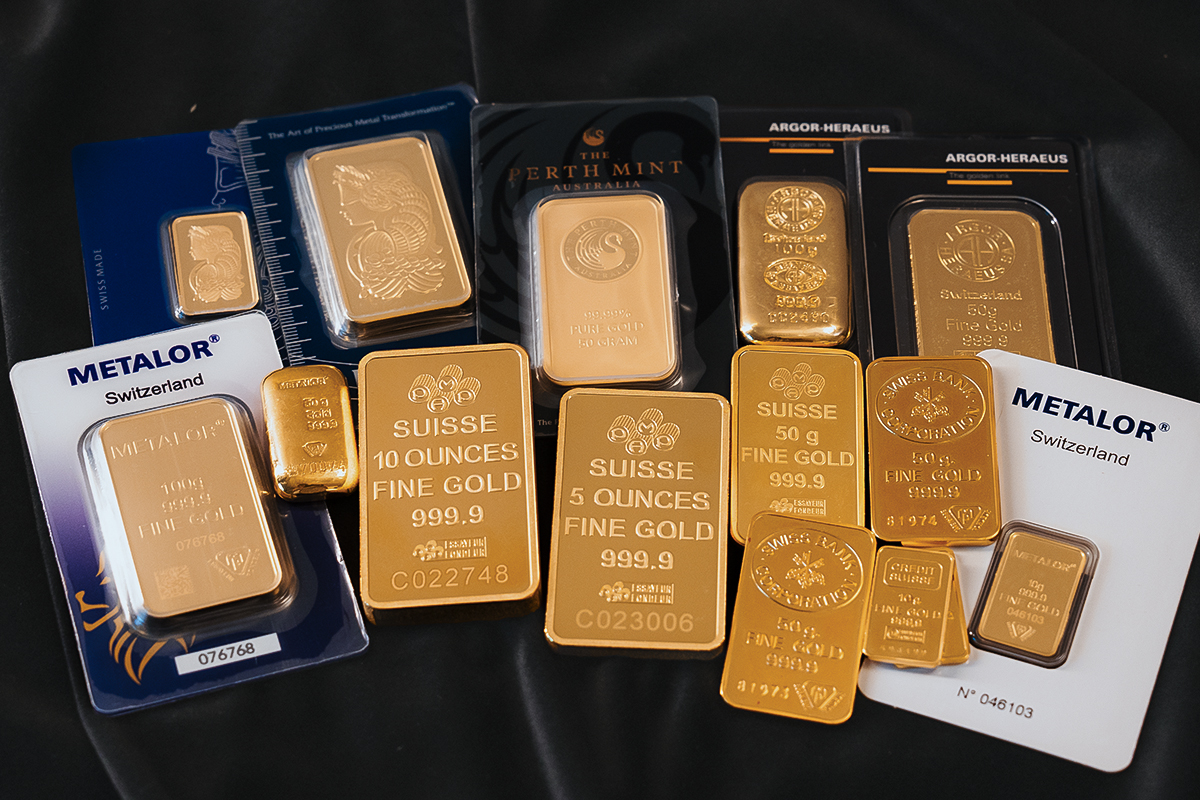
Used in Gold & Silver Pricing
The spot price of gold and the spot price of silver are always quoted per troy ounce. This is true across every major market — the London Bullion Market Association (LBMA), the COMEX futures exchange in New York, and dealers worldwide all use the troy ounce as the standard pricing unit. When a headline reads “gold hits $4,000,” it means $4,000 per troy ounce.
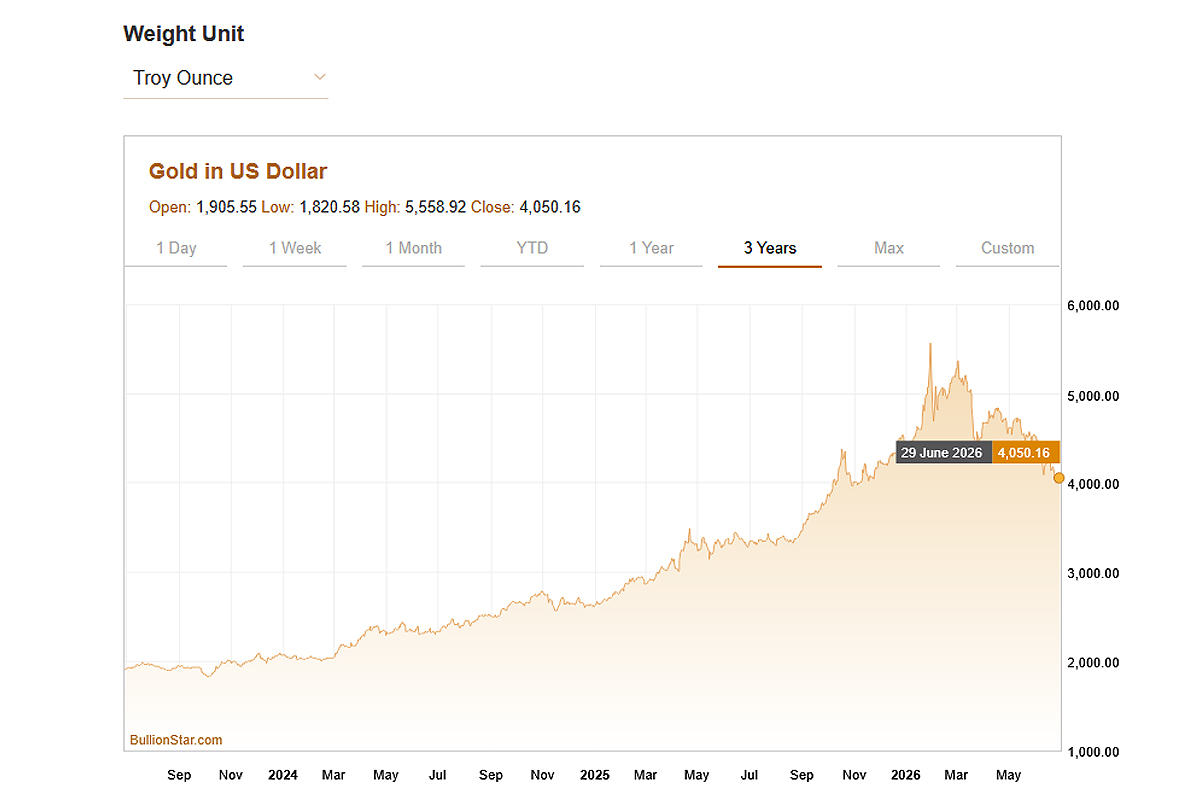
This has a direct practical effect when comparing prices. A per-gram price and a per-troy-ounce price are both common in retail bullion, and converting between them accurately matters. To convert a spot price per troy ounce to a price per gram, divide by 31.1035. To go the other way, multiply your per-gram price by 31.1035.
Silver follows the same convention. Despite being a much lower-priced metal, the silver spot price is quoted per troy ounce and silver coins and bars are specified in troy ounces in the same way as gold.
For current prices, BullionStar publishes live spot price charts for both metals, available in a range of currencies, timeframes and weight options:
Frequently Asked Questions
How many troy ounces are in a kilogram?
There are 32.1507 troy ounces in one kilogram. This is a useful figure when comparing kilogram bar prices against spot prices quoted per troy ounce.
How many troy ounces are in a pound?
One avoirdupois pound equals approximately 14.583 troy ounces. Note that a troy pound (a separate and largely obsolete unit) contains 12 troy ounces, which is actually lighter than a standard pound.
Is silver measured in troy ounces?
Yes. Like gold, platinum, and palladium, silver is priced and traded in troy ounces globally. All silver bullion products, such as coins, bars, and rounds, are specified in troy ounces.
Why is it called a troy ounce?
The name is believed to come from Troyes, a city in medieval France that hosted major international trade fairs. The weights used at those fairs spread across Europe and were formally adopted into English law in the 16th century, giving us the troy system still used in precious metals today.
What is the abbreviation for a troy ounce?
The most common abbreviations are ozt and oz t. You may also see toz. These distinguish the troy ounce from the standard avoirdupois ounce, which is abbreviated simply as oz.
Is a troy ounce the same as a regular ounce?
No. A troy ounce (31.1035 g) is approximately 10% heavier than a standard avoirdupois ounce (28.3495 g). The difference is about 2.75 grams — small in everyday terms, but significant when pricing precious metals.
Why is gold measured in troy ounces?
Gold has been traded using the troy weight system for centuries, with its roots in medieval European commerce. The troy ounce became the global standard for precious metals long before modern financial markets existed, and the convention has remained consistent ever since — ensuring prices are directly comparable across markets worldwide.
The Troy Ounce: The Global Standard for Precious Metals
The troy ounce is a small but important piece of context for anyone buying, selling, or simply following precious metals. Its weight of 31.1035 grams, and its history as the universal pricing unit for gold and silver mean it comes up constantly, from reading a spot price to comparing products across different weight formats.
At BullionStar, our product weights and prices are quoted in troy ounces, in line with global bullion market convention. If you’re ready to explore gold or silver products, or want to check the current spot price before making a decision, our live price charts are a good place to start.
Source link


