Published: 06-30-2026, 11:47 am
Key Takeaways
Gold and silver mining companies are generating margins that rival — and in some cases exceed — those of the largest technology companies, including Alphabet (Google) and Meta.The mechanism: gold moved from $1,800 to over $4,000 while all-in sustaining costs remained far more stable, creating extraordinary operating leverage. According to S&P Global’s 2026 Mine Cost Outlook, industry AISC is projected to decline 5% in 2026 even as gold prices rise further.Automation is coming. A mine that employs 500 people today may run on 12 within 10 to 15 years. High-quality assets take that long to build — they are irreplaceable.Capital is flowing to rare earth and critical mineral hype instead of gold, silver, and copper — the three metals that are genuinely great businesses at today’s prices.The supply constraint is structural. Misallocated capital today means supply shortfalls five to fifteen years from now.
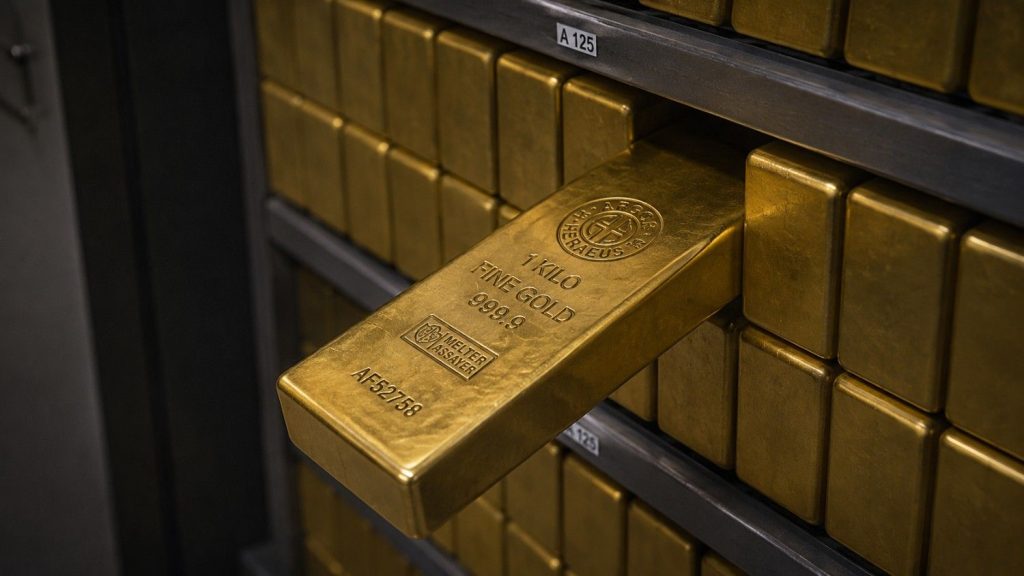
At today’s gold price of over $4,000 an ounce, as reported at goldsilver.com/price-charts/, senior gold miners are generating profit margins of roughly $2,400 to $2,600 per ounce — wider than Alphabet’s 32% operating margin and approaching Meta’s 41% operating margin for full-year 2025. That is not a metaphor. It is the arithmetic of a business where the revenue line moved dramatically while the cost base did not.
Precious metals investor Tavi Costa made this case in a recent GoldSilver conversation. The margin story, he argued, was the plan from the start. At these prices, it works like there is no tomorrow.
Why Are Gold Mining Margins So High Right Now?
The mechanism is direct. Revenue is set by the spot price. Costs are largely fixed.
When gold doubles, operating costs do not double with it. Labor contracts, energy hedges, and equipment leases move on their own timelines. So when gold moves from $1,800 to $4,000, a miner’s all-in sustaining cost — the industry’s comprehensive profitability metric, covering cash costs, sustaining capital, and overheads — does not follow the price up.
According to Investing.com data cited by Capital.com, the average all-in sustaining cost across large-cap gold producers was $1,424 per ounce in Q2 2025. Agnico Eagle, the world’s third-largest gold producer by output, reported AISC of $1,373 per ounce in Q3 2025. S&P Global’s 2026 Mine Cost Outlook projects industry AISC will decline a further 5% this year while gold prices are forecast to rise 24%.
The result is a margin spread of roughly $2,400 to $2,600 per ounce at today’s prices. On millions of ounces annually.
Alphabet reported a 32% operating margin for full-year 2025 and Q1 2026, according to SEC filings. Meta Platforms reported a 41% operating margin for full-year 2025. These are two of the most profitable businesses ever constructed, by operating margin standards. Senior gold mining operations are competing in that neighborhood right now. Not because they became more efficient — but because the monetary environment moved the revenue line dramatically.
This is operating leverage at its most powerful. Every dollar gold rises above the cost threshold flows almost entirely to the bottom line. For silver miners, with silver above $60 per ounce, the dynamic is the same.
The Knowledge That Changes Everything
2 Free Guides
Two essential guides — yours free. Understand why gold matters and why fiat currencies always fail.
What Does Automation Mean for Mining — and for Your Metal?
Here is where the thesis gets structurally more interesting.
Costa’s second argument is about what mining looks like in a decade. Automation is reshaping every heavy industry it touches. Mining is next. Within ten to fifteen years, he argues, a mine that employs 500 workers today may operate with twelve — all sitting in a control room, managing autonomous machine fleets around the clock, with no shift changes, no safety incidents, and no labor disputes.
When that transition happens, the mines that already exist — with proven reserves, built infrastructure, and regulatory permits — become extraordinarily valuable. Because they cannot be replicated quickly.
A high-quality mining asset takes 10 to 15 years to build. Permitting alone is a gauntlet. Everything that can go wrong will go wrong. So the arbitrage Costa describes is a time arbitrage: own the physical asset today, at today’s complexity discount, then watch automation strip most of the cost structure away.
This connects directly to what long-term precious metals investors already understand about physical metal. You cannot automate the supply of gold. There are only so many high-grade deposits in the world. Moreover, when mines become more profitable, the metal they produce does not become less scarce. The two theses reinforce each other.
Why Is Capital Going to the Wrong Metals?
There is a problem with this picture. The capital needed to build the next generation of mines is not flowing to gold, silver, and copper. It is flowing to rare earths.
Rare earth metals have been labeled “critical minerals.” That label has attracted institutional capital at a scale the markets do not justify. Costa’s question is the right one: is this a good business? Not “is this something the economy needs?” — but “is this a business that will make money?”
For most rare earth companies, the honest answer is no. The markets are too small, too niche, and too politically complicated. Capital is being deployed because of the designation, not the fundamentals.
Meanwhile, gold, silver, and copper are large, liquid, and structurally undersupplied. They are not getting the investment they need. If you are not buying the business, you are chasing a meme.
This matters for physical metal holders because it compounds the supply constraint. Mine construction is a long-cycle business. Capital misallocation today means supply shortfalls five to fifteen years from now.
What Happens When Gold Supply Cannot Keep Up With Demand?
Costa raised this directly. Central banks are buying gold at one of the highest sustained rates in decades. According to the World Gold Council, central banks purchased approximately 900 tonnes of gold in 2025, marking the fourth consecutive year of above-average buying. If that buying continues — and supply cannot respond fast enough — the price mechanism that restores balance can be dramatic.
Costa named a number: $30,000 per ounce. He was explicit that this is not a prediction. Rather, it is the mathematical output of sustained demand growth against a supply system that has not attracted sufficient investment. This is how commodity markets work. When supply cannot respond to demand in real time, price does the work instead.
The mechanism is not mysterious. It is the same one that has operated in commodity markets for centuries: capital starved of investment produces physical scarcity, and physical scarcity produces price adjustment.
For long-term holders of physical gold and silver, this is not a reason for alarm. It is a reason to understand why their existing allocation makes sense. The purchasing power case for gold does not require a $30,000 target. It simply requires that the monetary system continues doing what monetary systems do.
The Case for Owning the Real Thing
Costa’s framework throughout the conversation is what he calls first-principles thinking. Strip the narrative. Strip the branding. Ask one question: is this a good business?
By that standard, gold mining at $4,000 spot is an excellent business. Silver mining at $60 spot is an excellent business. Copper is structurally undersupplied and will remain so as electrification demand grows.
Rare earths fail the test for most companies. The math does not work.
The same logic applies to owning physical metal directly. You are not buying a narrative or a critical-minerals designation. You are buying one of the oldest, most liquid, and most globally recognized stores of value in history. The business case does not depend on anyone else believing it. It depends on the mathematics of purchasing power, monetary expansion, and real yields — mechanisms that have operated for centuries.
At $4,000 gold, the physical metal and the businesses that mine it are making the same argument from two different angles. The miners have better margins than Google. The metal has no counterparty risk and cannot be printed. Both are true at the same time.
The window to own the best assets before automation arrives is finite. The same is true of physical metal before the supply constraint compounds further. Financial sovereignty is not a vague concept. It is a position you either hold or you do not.
Stay On Top of Gold & Silver Prices
Get important market alerts sent straight to your inbox.
People Also Ask
Why are gold mining profit margins so high right now?
Gold mining margins are high because the gold price has more than doubled since 2022 — from around $1,800 to over $4,000 an ounce — while all-in sustaining costs have risen far more slowly. The average AISC across large-cap producers was $1,424 per ounce in Q2 2025, according to Investing.com data, leaving a spread of roughly $2,400 to $2,600 per ounce. That kind of operating leverage is what makes gold mining, at current prices, a genuinely exceptional business by any measure.
How does automation affect gold mining investments?
Automation is expected to dramatically reduce the workforce required to operate a mine — from hundreds of employees to perhaps a dozen managing autonomous equipment — within 10 to 15 years. That shift will strip most of the cost structure away from mines that are already built, making existing high-quality assets far more profitable. The catch is that those assets take 10 to 15 years to build, so the window to own them at today’s prices is finite. Tavi Costa breaks down the full automation thesis in his conversation on the GoldSilver YouTube channel.
Is gold mining more profitable than tech stocks?
At current gold prices, senior gold miners are generating per-ounce margins that compare favorably with the operating margins of Alphabet and Meta — two of the most profitable businesses ever built by that measure. Alphabet reported a 32% operating margin for full-year 2025; Meta reported 41%. Whether a specific mining company clears that bar depends on its cost structure and asset quality, but at the industry level, the margin picture is striking.
Why is physical gold a better long-term hold than rare earth metals?
Physical gold and silver are large, liquid, globally recognized monetary assets with centuries of demand history. Rare earth metals, by contrast, serve narrow industrial applications in markets that are small, politically complicated, and difficult to evaluate on pure business fundamentals. The key question, as outlined at goldsilver.com, is first-principles: is this a good business? For gold and silver, the answer is yes — reinforced by sustained central bank buying and a structural supply deficit.
What happens to gold prices if supply cannot keep up with central bank demand?
When supply cannot respond to demand in real time, price does the work instead — that is how commodity markets have always functioned. The World Gold Council reports that central banks purchased approximately 900 tonnes of gold in 2025, the fourth consecutive year of above-average buying. If mine supply continues to be underfunded relative to that demand, the price adjustment required to restore balance could be substantial. For more on the supply and demand dynamics, see the full discussion at goldsilver.com/industry-news/.
Watch the Full Conversation
Tavi Costa went deeper on all of this in his full conversation with GoldSilver. He covers the automation timeline in detail, the capital allocation problem in mining, why he still loves silver despite his current institutional focus on copper, and how to think about management quality as the key differentiator in the space.
The full video is on the GoldSilver YouTube channel. Watch it here.
SOURCES1. GoldSilver — Gold & Silver Price Charts2. GoldSilver YouTube — Tavi Costa interview, June 20263. Alphabet Inc. — SEC Form 8-K, Q4 2025 and Q1 2026 earnings4. Meta Platforms — Q4 and Full Year 2025 Earnings Release, January 28, 20265. S&P Global Market Intelligence — Gold All-In Sustaining Costs, October 20256. World Gold Council — Gold Demand Trends, 2025
Disclaimer: This article is for informational purposes only and does not constitute investment advice. Past performance is not indicative of future results. Always consult a qualified financial advisor before making investment decisions.
You May Also Like:
Source link