On Friday 24 July, millions of Chinese retail investors lose access to leveraged gold and silver trading through their banks. The Industrial and Commercial Bank of China, the largest bank on earth by assets, gave notice on 24 June that it would terminate margin and deferred-settlement precious metals contracts linked to the Shanghai Gold Exchange, and Postal Savings Bank of China, Ping An Bank and China Guangfa Bank followed within days. Anyone still holding a position has until Friday to close it, sell it, or take physical delivery.
The announcements triggered a wave of hot takes: China is banning gold to suppress the price, or striking at dollar-based gold pricing, or herding retail money into Hong Kong’s new clearing hub. None survives the details in the form usually made, though the first holds a grain of truth. What remain are two credible readings of what Beijing is doing, and both end in the same place.
What ends on Friday is the family of margin and deferred-settlement contracts that let a retail customer trade gold and silver through a banking app using borrowed money to control a position far larger than their own cash. Notably, this is not a legal ban but an operational withdrawal: Bank of China and China CITIC Bank had already raised margin requirements on some contracts to 120 to 140 per cent, which kills leverage.
What’s untouched matters more. Spot bullion, gold accumulation plans and physically backed ETFs, all fully paid in cash, continue as normal. The target is speculation on borrowed money, not the ownership of gold.
Nor is this a panicked response to the recent correction. Banks froze new retail SGE account openings back in late 2020, and dormant accounts were being closed by December 2025. June’s notices complete a five-year arc, the same playbook Beijing has run against retail leverage in property, equities and crypto.
The first reading of the move is simple risk management. Gold set a record just short of US$5,600 an ounce in January 2026, then fell roughly 30 per cent to just above US$4,000. Corrections like that destroy leveraged retail positions, cascade into margin calls and defaults, and leave banks holding the credit risk. Pulling a volatile leveraged product after a crash is unremarkable regulatory housekeeping and taken on its own the explanation is complete.
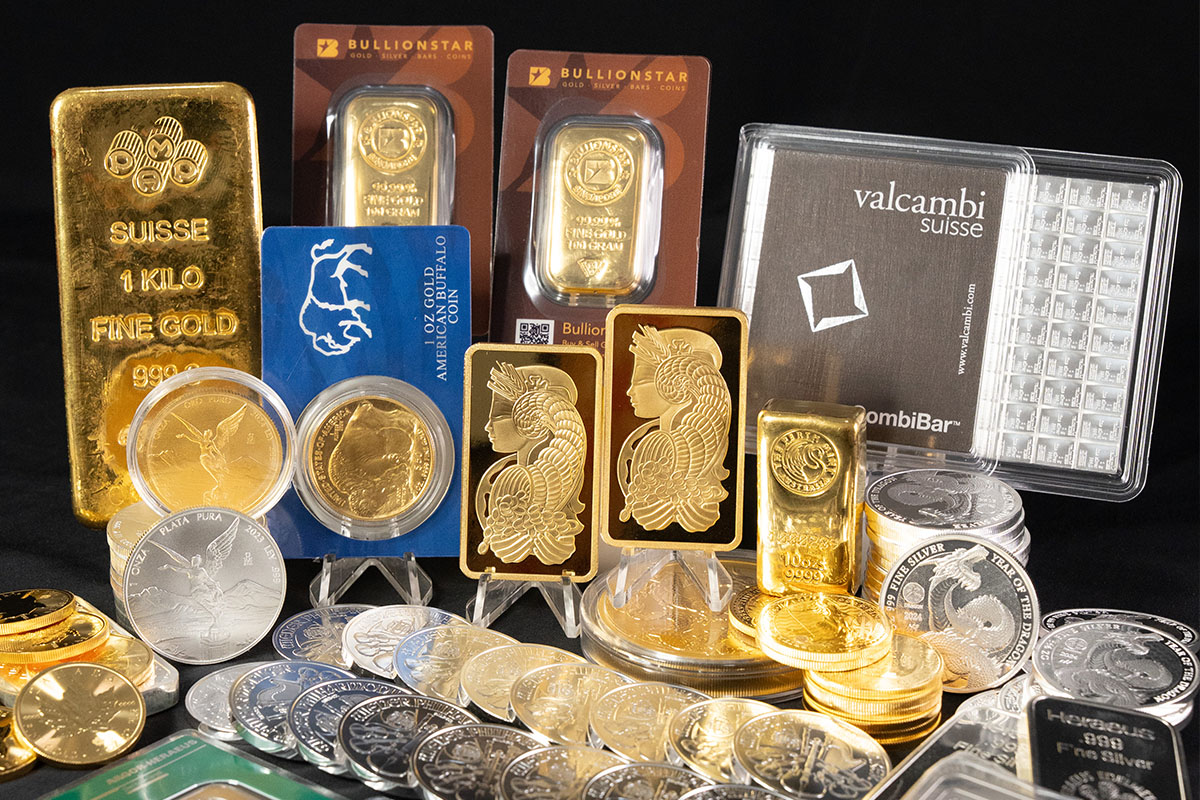
The second reading starts from the fact that China has never treated gold as just another commodity. Beijing has spent a decade building official reserves and a domestic physical bullion market centred on the Shanghai Gold Exchange, in service of strategic aims: diversifying away from the US dollar, strengthening confidence in the renminbi, insulating against Western sanctions, and expanding influence over global gold pricing. The People’s Bank of China extended its buying streak to 20 consecutive months in June, adding 14.93 tonnes, its largest monthly purchase since 2023, while reported imports run far ahead of declared reserve additions.
A state still accumulating gold has an obvious interest in a calmer domestic market, and here lies the grain of truth in the suppression claim: most leveraged retail positions were long, so forcing them to unwind adds selling pressure at exactly the moment the central bank is stepping up purchases. Amid eroding trust in the monetary system and deepening geopolitical fracture, a temporarily softer price is a gift to a state quietly accumulating physical metal. Any suppression is strictly short-term, though, because the same policy channels household demand into fully paid physical gold, which supports the price over the long run.
Hong Kong’s new central gold clearing system, which began trial operations on 7 July with 11 founding banks and a vault build-out toward 2,000 tonnes, is a parallel wholesale project rather than a consequence of the ban. Retail investors cannot access a clearing system. But the two initiatives rhyme: a cleanup of speculative paper at home, physical settlement infrastructure next door, with an accent on physical delivery that distinguishes it from London’s unallocated model.
Either way, the conclusion is the same. Speculative leveraged exposure is being restricted while fully funded physical ownership is encouraged and expanded, by Chinese households and the Chinese state alike. Chinese savers, however, must hold their metal behind capital controls. International investors face no such constraint. For savers thinking in years rather than weeks, the message from Shanghai is plain: own physical.
BullionStar will publish an in-depth analysis of the closure, and what it signals for physical gold demand, in the coming days.
Source link