Published: 07-17-2026, 10:39 am
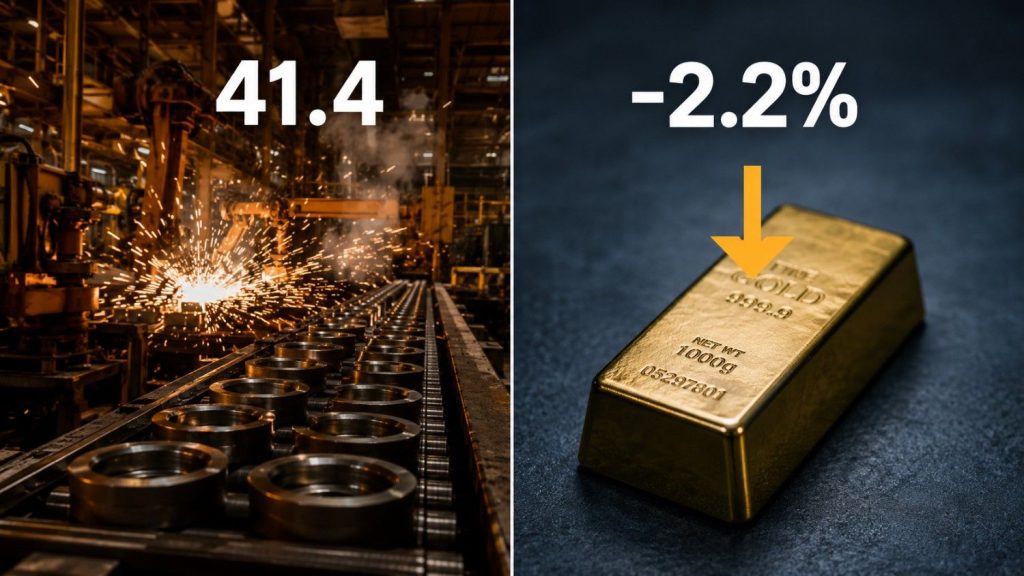
In today’s update: Gold fell 3.4% this week — its worst loss since June 1 — as U.S.-Iran escalation sent oil up 12% and repriced Fed rate-hike odds sharply higher. Physical demand in Asia didn’t flinch.
This gold price correction in July 2026 was driven by one thing: energy. Gold on Friday is around $3,968.08, down 3.4% on the week — its largest weekly decline since June 1, 2026. Silver is hovering at $55.00, off 1.09%. The gold-silver ratio widened to 72.15, up 0.88% on the session. Six consecutive days of U.S.-Iran hostilities sent oil up roughly 12%. As oil rose, inflation expectations followed. Fed rate-hike odds rose with them, and so did the cost of holding a non-yielding asset. Wall Street is split on whether the repricing is done.
Why Did Gold Fall Nearly 4%? The Gold Price Correction Explained.
The immediate cause was energy. U.S.-Iran escalation sent oil surging roughly 12% over six days, according to Reuters. That was enough to overwhelm the support from softer June CPI and PPI data released earlier in the week. When oil rises, inflation expectations follow — and with them, Fed rate-hike odds. That chain is what drives a gold price correction: higher rate expectations raise the cost of holding a non-yielding asset like gold.
Two more catalysts landed on Thursday. Dallas Fed President Lorie Logan became the first of Chair Kevin Warsh’s colleagues to publicly call for a rate hike. Speaking in Houston on July 16, Logan said inflation remains too far above target. Fed Vice Chair Philip Jefferson also suggested he would be open to raising rates if inflation doesn’t cool soon. As of Friday morning, traders were pricing a 73% probability of a December increase, per the CME FedWatch Tool. How far this runs depends on one thing: whether the oil spike holds into the July 28–29 FOMC meeting.
The Edge Every Investor Needs Smarter precious metals investing starts here. The Nuggets Newsletter brings you essential market insights, Fed updates, global trends, educational videos, and much more.
Does a Stronger Dollar Hurt Gold?
Yes — and the dollar has been the second headwind this week. As Fed rate-hike odds rise, the dollar strengthens, making gold more expensive for international buyers. That depresses demand and adds further pressure on spot prices.
The Federal Reserve’s July 2026 Beige Book, released July 15, described U.S. economic activity growing at a “slight to moderate pace,” with prices rising moderately. That’s a Fed with no near-term reason to ease. StoneX analyst Rhona O’Connell noted on July 15 that positioning across gold and silver is broadly subdued. Physical demand, ETF flows, and speculative bets are all quiet ahead of the FOMC.
A dollar that needs a hawkish Fed to hold its value is a dollar with a fiscal problem. That problem is the structural case for owning gold.
Why Are Banks Cutting Their Gold Price Forecasts?
Business Monitor International cut its 2026 gold forecast this week. BMI cited dollar strength and signs that Middle East tensions may eventually ease. It joins HSBC, Deutsche Bank, and Bank of America in lowering near-term average price targets, while leaving their longest-dated forecasts intact. On July 9, HSBC cut its full-year 2026 average to $4,560 from $4,864. However, it held its year-end target steady at $4,750, per Reuters.
The pattern is consistent across major banks: average forecasts are falling because the gold price correction has pushed prices below $4,200 for longer than expected. But year-end and multi-year targets are holding. The forces behind the 2024–2025 rally — central bank reserve diversification, fiscal expansion, de-dollarization — haven’t reversed. Cutting the average price forecast is not cutting the thesis. The path got harder. The destination didn’t change.
Why Is Bernstein Bullish on Gold When Others Are Cutting?
On July 9, Bernstein Research raised its full-year 2026 gold price target to $4,533 per ounce. Its H2 target moved to $4,375, while its 2027–2030 forecasts were unchanged. Bernstein’s position stands apart from the broader bank consensus: while others have adjusted their targets to reflect the gold price correction, Bernstein argues the headwind has largely played out. Real rates rose from 2.00% to 2.28%, dragging gold from roughly $4,650 to around $4,000. That move, Bernstein says, is done.
The next leg will be driven by structural central bank buying, not aggressive Fed tightening. Bernstein expects at most one or two hikes over the next 12 months — far fewer than the market fears. That removes Q2’s biggest headwind.
The buyer base supports that view. According to the World Gold Council’s 2026 Central Bank Gold Reserves Survey (June 16), 89% of central banks expect global gold reserves to rise over the next 12 months. A record 45% plan to add to their own holdings. Reserve managers don’t sell when yields tick up. If ETF outflows stay limited and central banks keep buying, moreover, the rate-gold inverse that defined Q2 may matter less than traders think.
Is Physical Gold Demand Holding Up in Asia?
It is — and the numbers are striking. Chow Tai Fook’s weight-based gold jewellery sales surged 35% year-on-year in mainland China in April–May 2026, per Citi Research. In Hong Kong and Macau, the same category jumped 57%. Fixed-price jewellery lagged in both markets. Similarly, Chow Sang Sang reported mainland China comparable store sales up over 20% year-on-year through April–June 21. Meanwhile, China’s overall jewellery retail sales fell 3.4% year-on-year in June, per China’s National Bureau of Statistics.
The mechanism is straightforward: despite the gold price correction, prices fell 11% month-over-month in June, yet consumers bought more, not less. This is value-driven demand — the opposite of ETF behaviour, where lower prices can trigger outflows. Physical buyers in the world’s two largest gold markets are not treating $3,968 as a reason to wait.
Stay On Top of Gold & Silver Prices
Get important market alerts sent straight to your inbox.
SOURCES1. Reuters — Gold on track for biggest weekly loss in six as Iran war fans inflation worries, July 17, 20262. Federal Reserve — Beige Book, July 15, 20263. CME Group — FedWatch Tool4. Bernstein Research via Yahoo Finance — Bernstein sees higher gold prices in H2 2026, July 9, 20265. World Gold Council — Central Bank Gold Reserves Survey 2026, June 16, 20266. Citi Research via CNBC — Chow Tai Fook shares rise 15% as gold price boosts profits, June 12, 20267. National Bureau of Statistics China — Retail Sales Press Releases, July 20268. Reuters via Yahoo Finance — HSBC lowers 2026–27 gold price forecasts, July 9, 2026
Disclaimer: This article is for informational purposes only and does not constitute financial or investment advice. Always consult a qualified financial adviser before making investment decisions.
You May Also Like:
Source link