Low risk investments prioritise capital preservation over high returns. Rather than chasing maximum growth, investors who favour lower-risk assets are primarily focused on protecting what they have — keeping pace with inflation, generating modest income, and avoiding the kind of losses that come with more volatile assets like equities or cryptocurrency.
It’s a category that covers a wide range of options: from high-yield savings accounts and government bonds to money market funds, certificates of deposit, and physical assets like gold. Each carries its own risk profile, return potential, and practical considerations.
This guide walks through what low risk investing actually means, the most widely used low risk investment options available today, and how to think about building a portfolio that balances safety with some potential for growth. We also look at where gold fits within a lower-risk allocation — an asset with a long track record of preserving purchasing power that is often overlooked in conversations about safe investments.
Please note that BullionStar does not provide investment or financial advice. The information below is for informational purposes only. Your individual circumstances and goals will always be the most important factors in any investment decision.
What Are Low Risk Investments?
Low risk investments are assets where the probability of losing your money is low. They tend to offer more predictable returns, greater stability, and less exposure to the kind of short-term price swings associated with equities or other growth assets. The trade-off is that these safe investments typically mean lower return potential — you’re prioritising the safety of your capital over maximising gains.
It’s worth noting that truly risk-free investments don’t exist. Even assets commonly described as risk-free (such as government bonds or cash in a savings account) carry some degree of risk, whether that’s inflation eroding your purchasing power, interest rate changes affecting bond values, or counterparty risk if an institution fails. What distinguishes low risk investments is that these risks are considerably smaller and more manageable than those associated with higher-risk assets.
Categories of Low Risk Investments
Low risk investments generally fall into a few broad categories. Each category suits different goals, time horizons, and levels of risk tolerance — and many investors hold a combination across several.
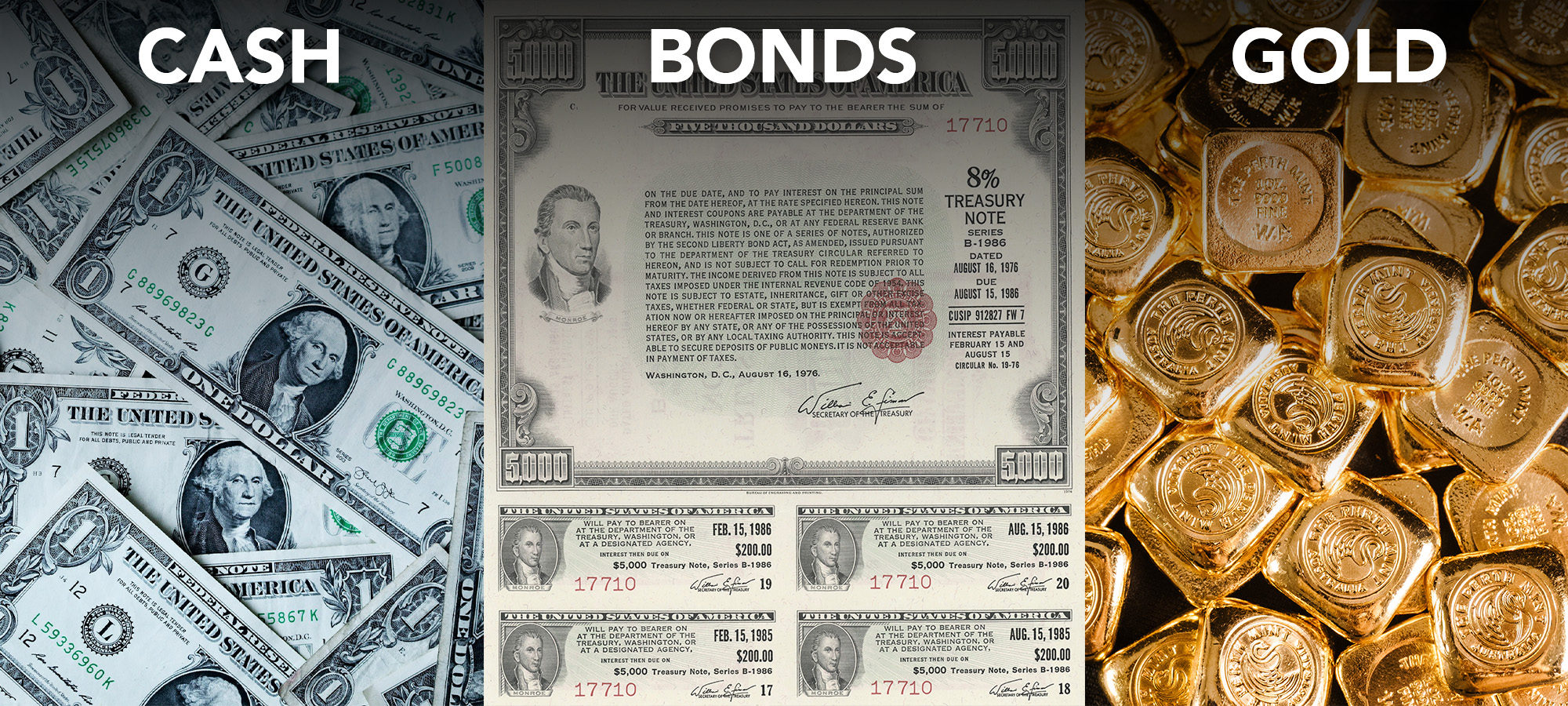
Cash and Cash Equivalents
Cash and cash equivalents include high-yield savings accounts, money market funds, and certificates of deposit (CDs). These are the most straightforward safe investments available — your capital is typically protected, returns are predictable, and in most countries deposits are insured up to a set limit by a government-backed scheme (such as the FDIC in the US, FSCS in the UK, or Singapore’s SDIC).
The appeal is simplicity and accessibility. You know what you’re getting, your funds are generally easy to access, and there is very little complexity involved.
The downsides are real, however. Returns on cash and cash equivalents are modest, and in periods of elevated inflation they can turn negative in real terms — meaning the purchasing power of your savings is falling even as the nominal balance grows. CDs also typically lock your money away for a fixed term, reducing flexibility. For investors with a longer horizon, relying on them too heavily risks a slow erosion of wealth.
Government Securities
Government bonds, treasury bills, and similar instruments are issued by national governments and are considered among the safest investments in the world. They are backed by the taxing power of the issuing government, and for major economies like the US, UK, or Germany, the risk of default has historically been very low.
That said, default risk is not zero — and it is worth taking seriously. Governments can and do default; it has happened across both emerging and developed economies throughout history. More broadly, the scale of sovereign debt globally has reached levels that would have been unthinkable a generation ago. Global debt now stands at over $353 trillion — a figure that raises legitimate questions about the long-term sustainability of government borrowing and the true risk profile of sovereign bonds.
Beyond default, interest rate sensitivity is the more immediate practical risk. When rates rise, the market value of existing bonds falls — investors who need to sell before maturity may receive less than they paid.
The risk inflation poses is well worth considering, because it is more insidious than it might appear. When you buy a government bond, you are locking in a fixed coupon payment for the term. If you purchase a $10,000 bond yielding 5%, you receive $500 a year — but that $500 is fixed regardless of what happens to prices. In a high-inflation environment, the real value of both your coupon payments and your original principal erodes year by year. If inflation consistently outpaces your yield, you lose purchasing power even while nominally receiving interest — a negative real return.
At the extreme end, this risk becomes acute. Holders of Venezuelan government bonds, for example, watched their real returns obliterated as inflation spiralled into the millions of percent. Weimar Germany’s bondholders suffered similarly. These are outlier cases, and major economies like the US or UK have not come close to such extremes — but the mechanism is real, it has happened, and it is worth understanding. Governments facing unsustainable debt burdens have a structural incentive to inflate their way out, and bonds are the asset most directly exposed when they do.
Government securities remain a legitimate capital-preservation tool, particularly over short timeframes, but investors should understand that “backed by government” is not the same as risk-free.
Physical Assets
Physical assets like gold occupy a distinct position in a low-risk allocation. Unlike the other categories above, gold sits entirely outside the traditional financial system. It carries no counterparty risk: there is no bank, government, or institution whose solvency you are relying on. You own it outright.
Gold’s primary role as a low-risk asset is as an inflation hedge and store of value, but it does have some limitations worth understanding. It generates no monthly/annual income, its price can also be volatile in the short term, and physical gold requires storage, either at home or via a professional vault. Gold’s strength is most evident over longer periods and during episodes of inflation, financial stress, or currency debasement. For investors focused on preserving purchasing power over the long run, it is a well-established option.
Best Low Risk Investments
Not all low risk investment options are equal. They vary in return potential, liquidity, time horizon, and the specific risks they carry. The options below represent the most widely used low risk investment vehicles, roughly ordered from lowest to highest return potential.
It’s also worth being direct about one common search: truly low risk, high return investments don’t exist as a reliable category. Higher returns almost always come with higher risk. What you can find are low risk options that offer better returns than others — and understanding the trade-offs between them is the key to choosing well.
Risk Level
Return Potential
Counterparty Risk
Best For
High-Yield Savings Account
Very Low
Low
Yes (bank)
Short-term savings, emergency funds
Money Market Fund
Low
Low
Yes (fund)
Cash parking, short-term holding
Certificate of Deposit (CD)
Low
Low–Medium
Yes (bank)
Fixed short-to-medium term savings
Treasury Bills
Low
Low–Medium
Yes (government)
Short-term capital preservation
Government Bonds
Medium
Low–Medium
Yes (government)
Medium-to-long term income
Gold
Low
Medium (long run)
None
Long-term wealth preservation, inflation hedge
High-Yield Savings Accounts
High-yield savings accounts are the most accessible low risk investment option for most people. They offer better interest rates than standard current accounts while keeping your capital fully accessible and, in most countries, are government-insured up to a set limit.
They are best suited to short-term low risk investing — an emergency fund, money you may need within the next one to two years, or capital you’re holding while deciding on a longer-term allocation. The limitation is that returns, while better than cash in a current account, rarely outpace inflation over the long run.
Money Market Funds
Money market funds invest in short-term, high-quality debt instruments — government securities, treasury bills, and short-term corporate paper. They aim to maintain a stable value while generating modest returns, and offer slightly higher yields than savings accounts in many rate environments.
They are an option for investors who want slightly more return than a savings account with comparable levels of safety and liquidity. As with savings accounts, the primary risk over time is that returns may not keep pace with inflation.
Certificates of Deposit (CDs)
Certificates of deposit offer a fixed interest rate over a set term — typically ranging from a few months to five years. In exchange for locking your money away, you receive a higher rate than most savings accounts. They are one of the more straightforward short-term low risk investments available, with predictable returns and capital protection.
The main drawback is inflexibility. Withdrawing early typically incurs a penalty, so CDs are best suited to money you’re confident you won’t need until the term ends. They also share the inflation risk of other fixed-rate instruments — a rate that looks attractive today may look less so if inflation rises during the term.
Treasury Bills and Government Bonds
T-bills and government bonds are among the most widely held investments in the world. T-bills are short-term instruments, typically maturing within weeks to a year, while government bonds have longer maturities and offer fixed coupon payments over their term.
For investors seeking predictable returns with low default risk over short to medium timeframes, they are a sound choice. As covered above however, they are not entirely without risk — interest rate movements affect bond values, and the broader context of global sovereign debt is worth keeping in mind for longer-dated holdings.
Gold
Gold occupies a different position to the other options on this list. It doesn’t pay interest or dividends, and the price of gold can be volatile in the short term. What it offers instead is something the other assets on this list cannot: genuine independence from the financial system, with no counterparty risk and a multi-thousand-year track record as a store of value.
Where gold earns its place in a low risk allocation is over the long run and during periods of stress. When inflation rises, currencies weaken, or financial systems come under pressure, gold has consistently preserved purchasing power in ways that savings accounts and bonds cannot. Investors holding government bonds or cash during a period of high inflation watch their real returns turn negative; investors holding gold have historically seen their purchasing power protected.
For investors building a low risk portfolio focused on long-term capital preservation rather than short-term income, gold is well worth considering. A modest allocation, held in physical form with no counterparty risk, can meaningfully improve a portfolio’s resilience across a range of economic conditions.
Where Does Gold Fit in a Low Risk Portfolio?
Gold is sometimes overlooked in conversations about safe investments because it doesn’t behave like conventional low-risk assets. It pays no interest, its price moves, and it requires storage. But measured against the things a low-risk portfolio is actually trying to achieve, such as preserving capital, protecting purchasing power, and providing resilience across different economic conditions, gold has a very strong case.

Gold as an Inflation Hedge
The most important role gold plays in a low-risk allocation is as an inflation hedge. Cash, savings accounts, and fixed-rate bonds all share the same vulnerability: when inflation rises, their real returns fall. A savings account paying 4% in an environment of 6% inflation is delivering a negative real return — you are losing purchasing power even as your nominal balance grows.
Gold has no fixed rate to be eroded. Over the past 50 years, gold has risen approximately 3,500% while the US dollar has lost around 83% of its purchasing power. It doesn’t always move in lockstep with inflation year to year, but over longer timeframes it has consistently protected investors from the kind of slow wealth erosion that fixed-rate, low-risk assets are exposed to.
Gold as a Safe Haven Asset
Beyond inflation, gold has a long track record of holding its value (and often appreciating) during periods of financial stress, recession, and geopolitical uncertainty. When equity markets fall and risk sentiment deteriorates, investors have historically rotated into gold as a safe haven.
This defensive quality is particularly relevant for investors building a low-risk portfolio today. With global debt at record levels and many governments carrying sovereign debt burdens that raise real questions about long-term sustainability, the case for holding an asset with no counterparty risk is stronger than it has been for some time. Gold sits outside the financial system entirely — its value is not dependent on any bank, government, or institution remaining solvent.
How Much Gold to Hold
For most investors, a gold allocation of between 5% and 15% of a broader portfolio is a reasonable starting range, depending on risk tolerance and goals. Conservative investors focused purely on wealth preservation might sit at the lower end; those more actively positioning around inflation or macro risk might hold more.
Two of the most widely discussed portfolio frameworks offer useful reference points. Ray Dalio’s All Weather Portfolio, designed to perform across all economic environments, allocates 7.5% to gold. The Browne Permanent Portfolio takes a more aggressive stance, with 25% in gold, reflecting its creator’s conviction that gold is essential protection against both inflation and financial crisis.
For a deeper look at allocation frameworks and how to split between gold and other precious metals, see our Gold & Silver Portfolio Allocation guide.
Buying Physical Gold
For investors adding gold to a low-risk portfolio, physical bullion is the most direct and defensible form of ownership. Unlike gold ETFs or mining stocks, physical gold carries no counterparty risk. You own the metal outright, and its value is not tied to the performance of a fund, a company, or a financial institution.
BullionStar stocks a full range of gold bars and gold coins from the world’s leading mints and refiners. For a comprehensive guide to the different ways to invest in gold and how to choose the right option for your goals, visit our How to Invest in Gold guide.
Frequently Asked Questions
Are low risk investments safe for retirees?
Low risk investments are generally well suited to retirees, who typically prioritise long-term capital preservation and steady income over growth. Gold is also worth considering as part of a retirement allocation, particularly as a long-term inflation hedge. In many countries, physical gold is accepted within tax-advantaged pension and retirement accounts, a recognition of gold’s credentials as a long-term store of value and a legitimate retirement asset.
Is gold low risk?
In the short term, gold can be volatile — its price moves daily and can swing sharply during periods of market stress. Over longer timeframes, however, gold has proven to be one of the most reliable stores of value available, consistently preserving purchasing power across decades and economic cycles. For investors with a long-term horizon focused on capital preservation and inflation protection, gold is a low-risk choice.
Are bonds low risk?
Government bonds are generally considered low risk, particularly those issued by financially stable major economies. The key risks are interest rate sensitivity and inflation, which erodes the real value of fixed coupon payments over time. Corporate bonds carry additional credit risk depending on the issuing company’s financial health. As a category, bonds are low risk relative to equities, but they are not risk-free. With global debt now exceeding $353 trillion, the long-term sustainability of sovereign borrowing is a legitimate concern — and one that is worth weighing when considering longer-dated government bond holdings.
Are CDs low risk?
Certificates of deposit are one of the lower-risk investment options available. They offer a fixed interest rate over a set term, capital protection, and in most countries are covered by government deposit insurance up to a specified limit. The main limitations are inflexibility, as early withdrawal typically incurs a penalty, and there is a risk that fixed returns are outpaced by inflation during the term. CDs are best suited to money you won’t need until the term matures.
What are low risk investments for beginners?
For beginners, the most important qualities in a low-risk investment are simplicity, accessibility, and capital protection. A high-yield savings account is a natural starting point — easy to open, fully liquid, and government-insured. Gold is also worth considering early: buying a single gold coin or small gold bar is a simple, tangible way to begin building a position in an asset with a long track record of preserving wealth. Starting small and building gradually across a few asset types is a sound approach for most beginners.
Are there low risk investments in Singapore?
Yes. Investors in Singapore have access to a range of low-risk investment options, including Singapore Savings Bonds (SSBs), Singapore Government Securities (SGS), fixed deposits with local banks, and money market funds. Singapore is also one of the most accessible markets in the world for physical gold investment — investment-grade gold and silver are exempt from Goods and Services Tax (GST) under Singapore’s Investment Precious Metals (IPM) scheme, making it cost-efficient to buy and hold physical bullion.
Are low risk investments worth it?
Yes, for the right goals. Low risk investments are not designed to maximise wealth, they are designed to protect it. For money you may need in the near term, capital you want to preserve, or a portion of a broader portfolio you want to hold defensively, low risk assets serve an important purpose. The risk of avoiding them entirely is that short-term market swings or long-term inflation can do real damage. A thoughtful low-risk allocation is a foundation, not a limitation.
Building a Low Risk Investment Portfolio
Low risk investing is not about avoiding all risk — it’s about understanding which risks you’re taking on and ensuring they align with your goals. The assets covered in this guide each serve a different purpose: savings accounts and money market funds for short-term capital security and liquidity; government bonds and CDs for predictable fixed returns over set timeframes; and gold for long-term purchasing power preservation and resilience against inflation and financial stress.
If you’re considering adding gold to a low-risk allocation, physical bullion is the most direct and straightforward way to do it. At BullionStar, we stock a full range of gold bars and gold coins from the world’s leading mints and refiners, with transparent pricing, and secure vault storage available.
Source link