Published: 07-14-2026, 09:33 am | Updated: 07-14-2026, 09:34 am
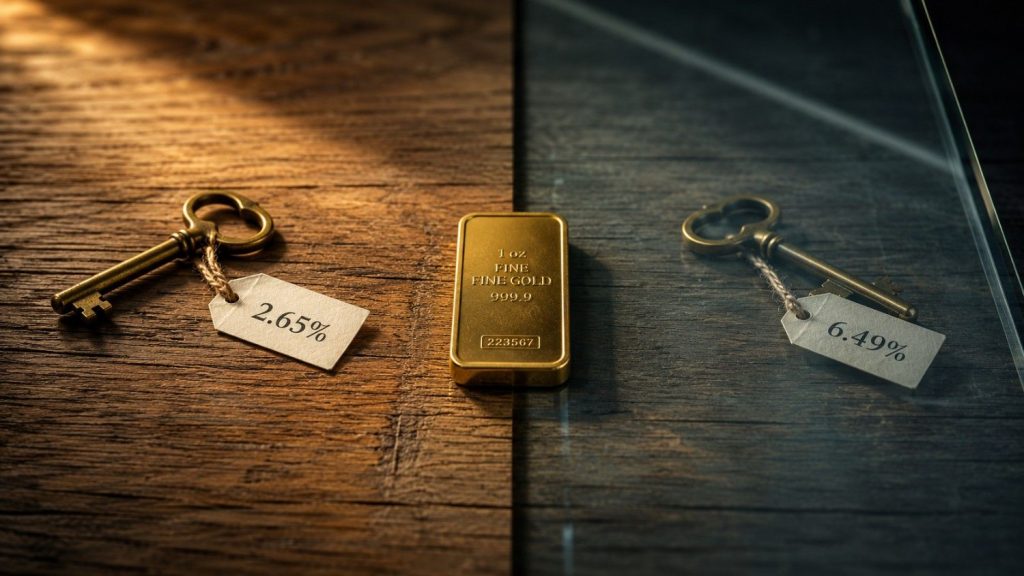
June inflation just printed its largest single-month decline since April 2020. The Consumer Price Index fell 0.4 percent on a seasonally adjusted basis last month — well below the 0.1 percent drop economists expected — as gasoline prices collapsed nearly 10 percent following the brief Iran ceasefire that temporarily reopened the Strait of Hormuz.
What Did the Gold Price Do After June CPI?
Gold responded immediately. $4,091 an ounce — up $90, or 2.25 percent — as of 8:36 AM ET. After Gold had fallen 1.4% on Monday amid renewed Iranian strikes on Strait of Hormuz tanker traffic, this morning’s print reversed the fear trade. Silver climbed alongside it, rising to $59.39, a gain of 3.03 percent on the session.
Why Did June CPI Send Gold Higher?
The mechanism runs through real yields. Gold is a non-yielding asset, so its opportunity cost — what you give up by holding it instead of bonds — rises and falls with real interest rates. Real yields are simply the nominal Treasury yield minus expected inflation. When inflation falls sharply, as it did this morning, the market immediately recalculates: a softer inflation print compresses the case for additional rate hikes, nominal yields ease, and real yields compress. That compression directly lowers gold’s opportunity cost — and higher prices follow.
Specifically, nine of the FOMC’s eighteen dot-plot participants had penciled in at least one rate hike before year-end. That hawkish positioning was the primary weight pressing on gold through June and early July. A softer-than-expected inflation print — particularly the flat core reading — gives the eight “hold” members ammunition. As a result, September hike probability, which had climbed to 76 percent at CME FedWatch, is likely to reprice downward as traders process this data.
The Edge Every Investor Needs Smarter precious metals investing starts here. The Nuggets Newsletter brings you essential market insights, Fed updates, global trends, educational videos, and much more.
What the Headline Number Isn’t Telling You
However, the headline deserves scrutiny before anyone calls the inflation fight won. The entire monthly decline came from energy — specifically, that 9.7 percent drop in gasoline prices. Shelter inflation rose just 0.1 percent, its smallest monthly gain since January 2021. Meanwhile, core CPI came in flat at 0.0 percent for the month. On the surface, that sounds reassuring. In practice, it means the underlying demand-driven inflation — services, wages, shelter — has not accelerated further. But it also has not yet convincingly reversed.
Furthermore, the ceasefire that caused June gasoline prices to fall ended on July 8. Since then, fresh US military strikes on Iranian targets have pushed oil prices back toward the levels that produced May’s 4.2 percent headline. In other words, the energy relief in this morning’s report is already reversing in real time. July’s CPI — not released until August — will almost certainly show the Hormuz re-escalation working its way back into headline inflation.
Does One Good CPI Print Change the Structural Case?
No — and the data this morning actually reinforces why. Core CPI running at 2.6 percent year-over-year still sits 30 percent above the Federal Reserve’s 2 percent target. The Fed is operating with a funds rate of 3.50 to 3.75 percent into an economy where shelter inflation rose 3.3 percent over the past year and airline fares are up 26.5 percent. The structural case remains intact: a central bank caught between above-target inflation and a geopolitically fragile energy environment cannot hike as aggressively as the inflation picture demands. Consequently, real yields stay constrained. Gold benefits from that constraint whether rates stay flat or rise modestly.
The Second Corner: Why This Print Is Backward-Looking
Here is the structural insight most headlines will miss. Today’s CPI is a snapshot of June — a month when the Iran ceasefire was holding and gasoline prices were falling. That ceasefire is over. The Strait of Hormuz is again contested. Oil prices are rising. Therefore, the inflation relief this report shows is a backward-looking artifact of a geopolitical condition that no longer exists.
Moreover, the Fed cannot solve an oil supply shock with rate hikes. It can hike to slow demand — but restricting American credit will not reopen the Strait of Hormuz. That structural mismatch between the inflation tool and the inflation source is precisely why the Fed remains boxed in. Every month this continues is another month where purchasing power erodes through a channel monetary policy cannot directly address. Physical metal, sitting outside the financial system, holds its value in exactly this environment.
What to Watch Next
Fed Chair Kevin Warsh testifies before the House Financial Services Committee starting at 10:00 AM ET this morning — roughly 90 minutes after this CPI print dropped. His tone on whether today’s data changes his near-term policy outlook will move both metals further. A measured, data-dependent response keeps the relief rally intact. A hawkish framing — focused on core stickiness and Hormuz re-escalation risks — would likely cap the upside. After that, the FOMC meeting on July 28–29 is the next major catalyst, followed by June PCE on July 30, which is the inflation measure the Fed itself watches most closely.
Stay On Top of Gold & Silver Prices
Get important market alerts sent straight to your inbox.
SOURCES1. Bureau of Labor Statistics — Consumer Price Index — June 2026 (USDL-26-1191, July 14, 2026)2. Bureau of Labor Statistics — Consumer Price Index — May 2026 (USDL-26-0824, June 10, 2026)3. Federal Reserve — FOMC Statement and Summary of Economic Projections, June 17, 20264. CME Group — FedWatch Tool — September 2026 Rate Probability, July 14, 20265. GoldSilver — Live Gold & Silver Spot Prices, July 14, 2026
Disclaimer: This article is for informational purposes only and does not constitute financial or investment advice. Always consult a qualified financial adviser before making investment decisions.
You May Also Like:
Source link