Building wealth over time comes down to a simple principle: choosing assets that can grow steadily over years or decades, and giving them the time they need to compound and appreciate in value. Long-term investments span a wide range of options, from stocks and index funds to real estate, bonds, and physical assets like gold and silver. Each option has a different risk profile, return potential, and role to play in a portfolio built for the long haul.
BullionStar has helped investors build long-term wealth with physical precious metals since 2012, and we firmly believe gold and silver deserve a place in any well-constructed long-term investment portfolio. Precious metals won’t replace the growth potential of stocks or the yield of bonds, but as a finite, tangible store of value with no counterparty risk, they offer something few other assets can: protection against inflation and currency debasement over the very time horizons long-term investors care about most.
This guide covers what counts as a long-term investment, the best options across major asset classes, proven long-term investing strategies such as dollar-cost averaging and portfolio allocation, and where gold and silver fit alongside other holdings.
Please note that BullionStar does not provide investment or financial advice. The information below is for informational purposes only. Your individual circumstances and goals will always be the most important factors in any investment decision.
What Are Long-Term Investments?
Long-term investments are assets you buy with the intention of holding for an extended period (typically five years or more) rather than trying to profit from short-term price movements. The extended time horizon is the defining feature: it gives you room to ride out volatility, benefit from compounding, and let an asset’s underlying value play out, rather than reacting to day-to-day noise.
This longer horizon comes with real practical advantages. Compounding is one of the most powerful: returns generated in early years go on to generate their own returns, and the effect accelerates the longer money stays invested. Tax efficiency is another consideration — holding physical gold or silver in a jurisdiction like Singapore, where investment-grade metals are exempt from GST and individuals pay no capital gains tax, means long-term gains aren’t eroded by tax on the way out. Long-term investing also means fewer transactions overall, keeping trading costs, fees, and spreads to a minimum compared with active, short-term strategies.
Long-Term vs Short-Term Investment
The difference between a long-term and short-term investment comes down to time horizon and intent, not the asset itself. A stock, a bond, or an ounce of gold bullion can be either a short-term trade or a long-term holding — what matters is how long you plan to hold it and why.
Short-term investments are typically held for under a year and geared towards quick, opportunistic gains. They demand more active management, closer attention to price movements, and a higher tolerance for frequent trading costs. Long-term investments, by contrast, are built around patience: buying quality assets and giving them years or decades to grow, without needing to time the market correctly to succeed. For most investors building wealth over a lifetime, a long-term approach carries considerably less stress, lower costs, and a stronger historical track record than trying to trade in and out of positions.
Best Long-Term Investments by Asset Class
There isn’t a single “best” long-term investment. Having a diverse portfolio is recommended over relying on a single asset, and the right mix depends on your goals, risk tolerance, and time horizon. The table below gives a quick comparison across the major asset classes, before we break down what each one means for your portfolio.
Asset Class
Typical Long-Term Return
Risk Level
Best For
Stocks
7–10% annually (S&P 500 historical average)
Medium–High
Long-term capital growth
Index Funds & ETFs
7–10% annually, tracking the broad market
Medium
Diversified growth without single-stock risk
Real Estate
3–5% annually, plus potential rental income
Medium
Passive income and inflation-linked appreciation
Bonds
2–5% annually
Low–Medium
Capital preservation and steady income
Gold
~10–11% annually over the past two decades
Low
Inflation hedge and portfolio diversification
Silver
~10–12% annually over the past two decades, with sharper volatility than gold
Medium
Higher-growth complement to gold within a precious metals allocation
Best Long-Term Stocks
Stocks remain a strong performer over long horizons. When held over decades, publicly traded companies have historically outpaced many other asset classes, but working out the best long-term stocks can be difficult and stressful for individual investors. Index funds and ETFs offer a lower-effort way to capture that same growth without the risk of picking individual losers, making them a common core holding for long-term investors. Short-term risk is high however, and buying stocks at the wrong time can see values plummet.
Real Estate
Real estate is a popular choice as a long-term investment, combining the potential for rental income with long-term asset appreciation. But it’s not accessible to everyone — even buying a single property can stretch many people’s incomes, let alone a second one purchased purely for rental income. Real estate is also more hands-on than stocks or funds, with real liquidity and maintenance trade-offs, and tax treatment on property can vary considerably between jurisdictions.
Bonds
Bonds trade growth potential for stability and predictable income, making them a common ballast against stock market volatility as an investor’s time horizon shortens. Government bonds in particular have long been considered close to risk-free, backed by the taxing power of the issuing state, but that assumption is increasingly being tested by the sheer scale of government borrowing. The Institute of International Finance recently reported total global debt approaching $353 trillion, a figure that raises legitimate long-term questions about sovereign default risk and how heavily indebted governments will keep servicing their obligations without resorting to further money printing. It’s one of the key arguments for holding a portion of a portfolio in assets like gold, which carry no counterparty risk and can’t be devalued by a government decision — read more in our article on the global debt crisis.
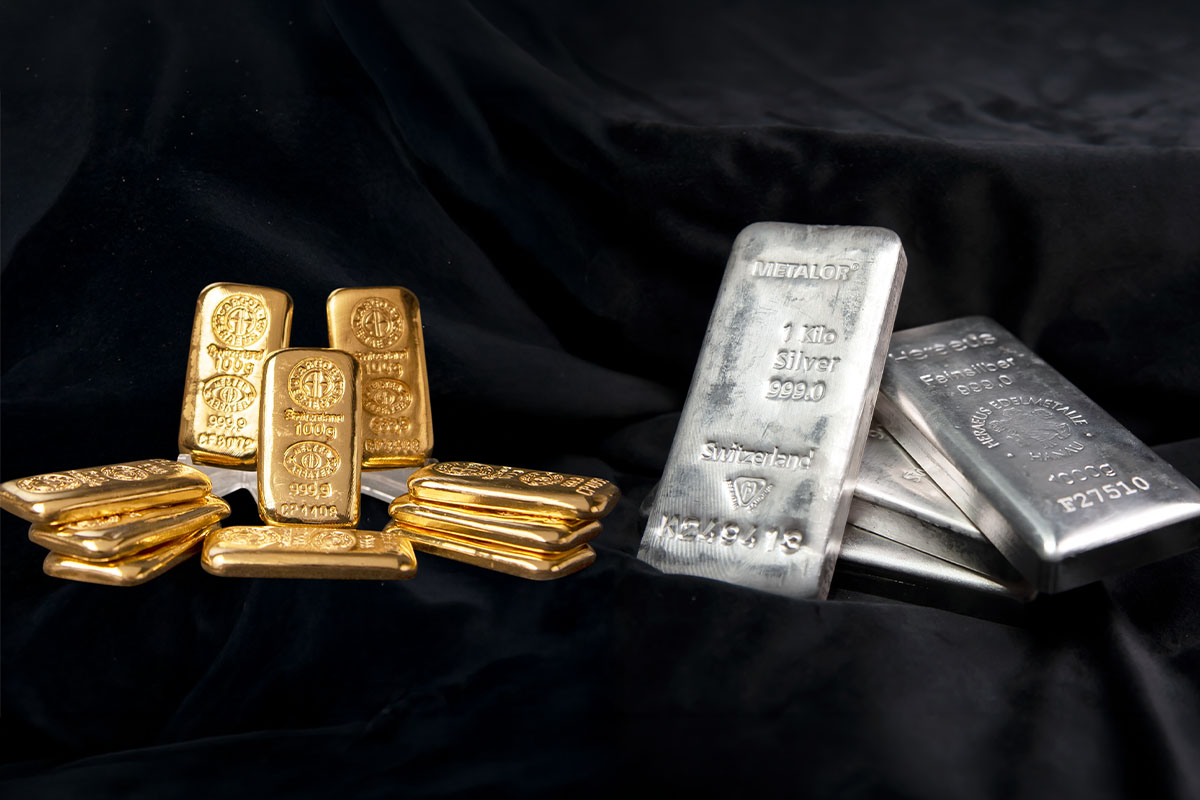
Gold & Silver
Gold’s annualized return of around 10–11% since 2000 stands up well against equities over the same period, driven by a run of major bull markets during the 2008 crisis, the pandemic, and the current inflationary cycle. Silver acts differently to gold, with periods of sharp price gains, followed by a pullback and consolidation. Learn more about gold vs silver as an investment.
Most allocation frameworks still position precious metals at 5–10% of a long-term portfolio, held as an inflation hedge and diversifier rather than a primary growth engine. See our Gold & Silver Portfolio Allocation guide for a full breakdown of how much to hold and how to weight gold against silver.
Long-Term Investing Strategies
Choosing the right assets is only half the equation — how you invest matters just as much as what you invest in. A solid long-term investment plan combines a few proven approaches: buying and holding quality assets, investing consistently over time, and allocating across asset classes deliberately. Together, these form the backbone of long-term wealth building, regardless of which assets make up your portfolio.
Buy-and-Hold
Buy-and-hold is the simplest long-term strategy: choose quality assets, and hold them through market cycles rather than trying to trade in and out based on short-term price movements. It relies on the same principle of compounding covered earlier — time in the market, rather than timing the market, is what drives long-term returns. The approach requires patience and a willingness to ride out volatility, but it also removes much of the stress, cost, and risk that comes with frequent trading.
Dollar-Cost Averaging (DCA)
Dollar-cost averaging involves investing a fixed amount at regular intervals, regardless of the asset’s price at the time. Because you buy more units when prices are low and fewer when prices are high, DCA smooths out your average purchase price and removes the pressure of trying to time entry points perfectly. It’s a particularly effective strategy for assets like stocks, gold, and silver, where short-term price swings can otherwise tempt investors into poor decisions. BullionStar’s AutoInvest feature is built for exactly this purpose, letting investors automatically buy gold and silver on a set schedule without needing to actively monitor the market.
Asset Allocation and Rebalancing
Asset allocation is the process of deciding how to split a portfolio across asset classes such as stocks, bonds, real estate, and gold, based on your goals, risk tolerance and time horizon. As covered earlier, most portfolio allocation frameworks position precious metals at around 5–10% of a long-term portfolio. Because different assets grow at different rates, your original allocation will drift over time — rebalancing means periodically buying or selling to bring the portfolio back in line with your target weights, which helps manage risk and lock in gains from outperforming assets.
Is Gold a Good Long-Term Investment?
Yes, gold is a good long-term investment, and one of the strongest arguments for holding it lies specifically in that long time horizon. Gold has preserved wealth across thousands of years and countless currency collapses, wars, and financial crises — a track record no other asset class can claim. It has no yield and its case isn’t built on short-term price appreciation. Instead, gold earns its place in a long-term investment portfolio as a finite, physical asset with no counterparty risk, one that moves largely independently of stocks and bonds and holds its purchasing power when paper currencies don’t.
That lack of correlation is what makes gold valuable alongside other long-term low risk investments like government bonds and cash. Where those assets carry inflation and currency risk, gold does not — it is often the more reliable long-term hedge of the two when inflation and currency debasement are the primary concern.

Is Gold a Long-Term Investment?
Yes. Gold’s characteristics point squarely towards a long-term holding rather than a short-term trade. It generates no income while held, so there’s no yield to collect while you wait, and the gold price can be flat or volatile over shorter periods. What gold offers instead plays out over years and decades: capital preservation, a hedge against inflation and currency debasement, and a reliable store of value that has outlasted every fiat currency in modern history. Central banks themselves treat gold this way, holding it as a long-term reserve asset rather than trading it for short-term gain — a strong signal of how the asset is meant to be used.
Is Silver a Long-Term Investment?
Yes, though with a slightly different character to gold. Silver shares the same monetary store-of-value properties, but the price of silver is also driven by industrial demand, which adds a growth dimension gold doesn’t have. This makes silver more volatile in the short term, but also gives it greater upside potential over a long-term holding period, particularly during precious metals bull markets. For a full breakdown of how silver compares to gold as a long-term hold, see our dedicated guide – Is Silver a Good Investment?
Held together, gold and silver give a long-term portfolio two complementary tools: stability and capital preservation from gold, and higher growth potential from silver. For more on why we believe both deserve a place in your portfolio, see our guides on Is Gold a Good Investment?, How to Invest in Gold, and Portfolio Diversification.
Frequently Asked Questions
What is a long-term investment?
A long-term investment is an asset bought with the intention of holding for an extended period (typically five years or more) rather than trying to profit from short-term price swings. The category covers a broad range of assets, from stocks and index funds to real estate, bonds, and precious metals like gold and silver, each offering a different balance of risk, return, and role within a portfolio. What defines an investment as “long-term” is patience: giving an asset time to compound and its underlying value to play out, rather than reacting to daily market noise.
What’s the best long-term investment for retirement?
There is no single best long-term investment for retirement — the right mix depends on your time horizon, risk tolerance, and how close you are to needing the money. As retirement approaches, many investors shift towards more defensive holdings such as bonds and precious metals, which help preserve capital and reduce portfolio volatility precisely when there is less time to recover from a downturn.
Best long-term investments for 2026?
The best long-term investments for 2026 remain broadly consistent with sound long-term principles: a diversified mix of stocks or index funds for growth, bonds for stability, real estate for income and appreciation, and gold and silver for inflation protection and diversification. What has changed heading into 2026 is the macro backdrop — persistent inflation concerns, record global government debt, and continued central bank gold buying have strengthened the case for holding precious metals as part of that mix, alongside more traditional growth assets.
Should I invest long-term in gold?
Yes, gold is well suited to long-term investing. Its value proposition — capital preservation, inflation protection, and a store of value with no counterparty risk — plays out over years and decades rather than delivering quick returns. Gold is not designed to completely replace growth assets like stocks in a long-term portfolio, but as a 5–10% allocation, it provides a layer of protection that few other assets can match, particularly during periods of high inflation or financial stress.
What’s the safest long-term investment?
There is no investment that is completely without risk, but government bonds from stable, developed economies are traditionally considered among the safest long-term options, alongside cash and cash equivalents. Gold is also widely regarded as one of the safest long-term holds, not because its price never moves, but because it carries no counterparty risk and cannot be devalued by a government decision — a meaningful form of safety that bonds and cash don’t fully offer given today’s record levels of global government debt.
How much of my portfolio should be in gold and silver for the long-term?
Most allocation frameworks suggest holding 5–10% of a long-term portfolio in gold, with silver forming a smaller complementary position given its higher volatility. The right split depends on your risk tolerance and view on each metal’s outlook — investors prioritising stability typically weight more heavily towards gold, while those comfortable with volatility may hold proportionally more silver for its higher upside potential. Our Gold & Silver Portfolio Allocation guide covers the main frameworks in more detail.
What is the best long-term investment strategy?
The best long-term investment strategy combines a few core principles rather than relying on any single approach: buying and holding quality assets, investing consistently through dollar-cost averaging, allocating deliberately across asset classes, and rebalancing periodically to keep that allocation on track. For precious metals specifically, BullionStar’s AutoInvest feature makes dollar-cost averaging into gold and silver straightforward, automating regular purchases without the need to time the market.
Is real estate a good long-term investment?
Yes, real estate is a good long-term investment for many people, combining potential rental income with long-term price appreciation. It does, however, come with a high barrier to entry, ongoing maintenance responsibilities, and far lower liquidity than assets like stocks or gold, which can be bought and sold within moments. Real estate works best as one part of a diversified long-term portfolio rather than a sole holding, particularly given how much capital is typically tied up in a single property.
Best Long-Term Investments: The Bottom Line
Building long-term wealth isn’t about finding one perfect investment — it’s about combining assets that each play a distinct role: stocks and index funds to drive growth, real estate and bonds to add income and stability, and gold and silver to protect what you’ve built against inflation, currency debasement, and financial shocks that no other asset class can fully hedge against. Patience, consistency, and a clear plan matter more than trying to pick winners or time the market.
Gold and silver won’t replace the growth potential of equities, but as a 5–10% allocation within a diversified long-term portfolio, they offer something few other assets can: a finite, physical store of value with thousands of years of history and no counterparty risk. As global debt continues to climb and currencies face long-term pressure, that protection is arguably more valuable today than ever.
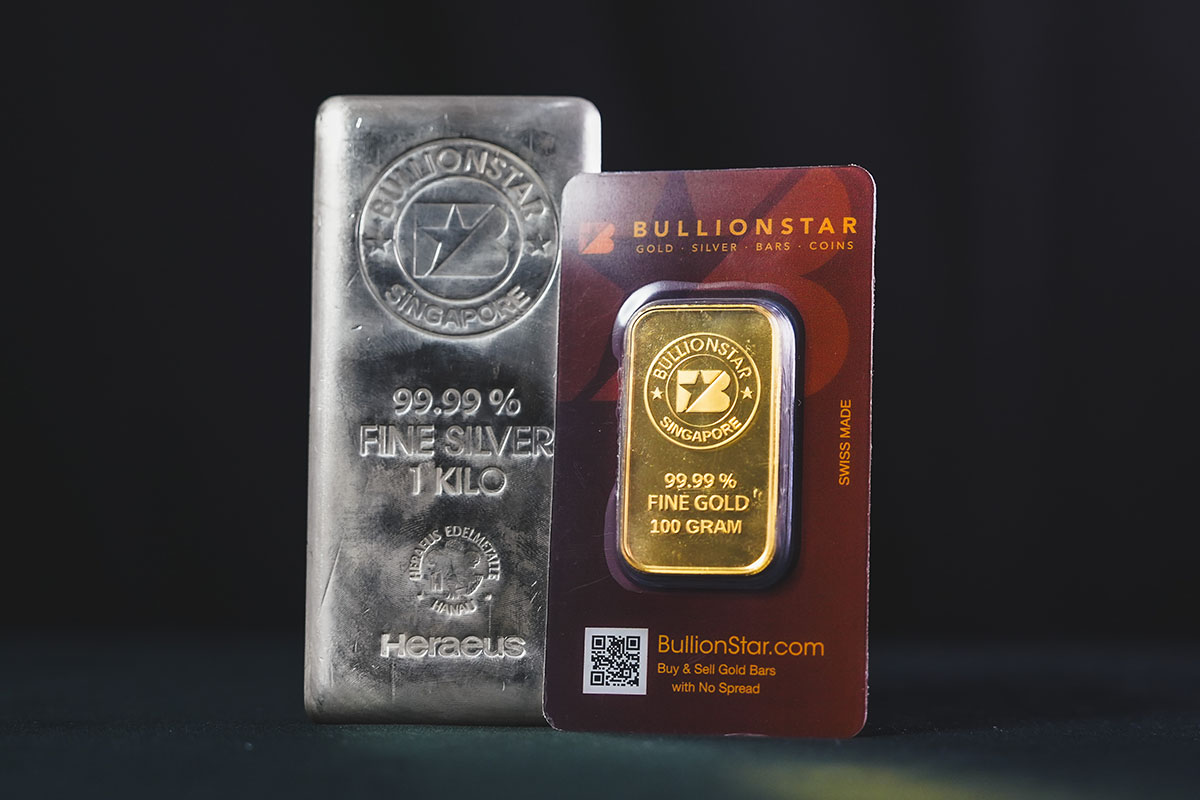
Ready to build your long-term portfolio? Browse our full range of gold bars and gold coins, silver bars and silver coins, or set up AutoInvest to start dollar-cost averaging automatically. Have questions? Get in touch with our team at [email protected] — we’re happy to help.
Source link